

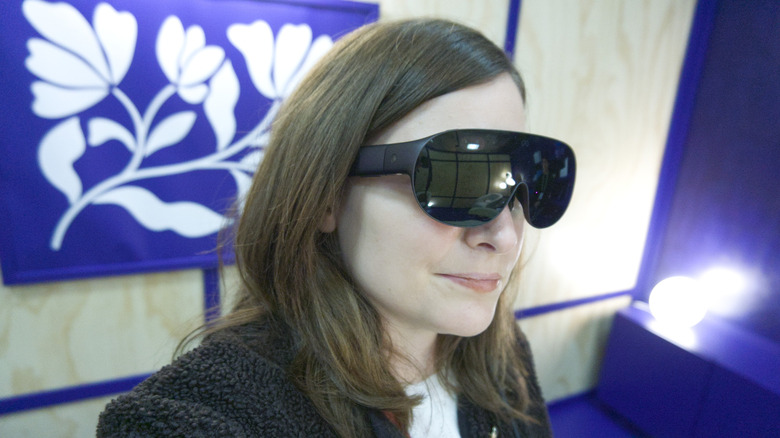
Meta’s wearable lineup has expanded dramatically, and as of this week, it looks completely different than it did even a month ago. At Meta Connect 2026 (held September 23–24 in Menlo Park), Meta unveiled a genuinely new product category — Meta VR Glasses — alongside a refreshed Ray-Ban Meta lineup, a camera-free audio model, and price hikes on the existing Quest headsets. If you’re researching “Meta VR glasses,” you’re likely encountering three very different product families at once: AI-powered smart glasses, standalone VR/MR headsets, and now a brand-new glasses-style spatial computer. This guide untangles what each product actually does, what it costs, what reviewers and users say, and what changed this week.
Quick Answer: What Are Meta VR Glasses?
“Meta VR glasses” can mean three different things. Ray-Ban Meta and Ray-Ban Meta Display are camera- and AI-equipped smart glasses for everyday wear — not full VR. Meta Quest (3, 3S) is Meta’s standalone virtual/mixed-reality headset line for gaming and immersive apps. Meta VR Glasses is a brand-new, glasses-shaped VR device announced September 23, 2026, launching Spring 2027 at $1,299.99. These are distinct products with different displays, weight, and use cases — don’t treat them as interchangeable.
What Are Meta VR Glasses and How Do They Work?
At a technical level, Meta’s wearables share some building blocks — cameras, microphones, AI models, and Meta’s Horizon OS — but apply them very differently depending on the product.
Smart glasses (Ray-Ban Meta family) use outward-facing cameras, open-ear speakers or bone-conduction audio, and a multi-microphone array to capture photos, video, and voice commands. Meta AI runs on-device and in the cloud to answer questions about what you’re looking at, translate speech, or read incoming messages aloud. The Ray-Ban Meta Display model adds a small in-lens display for visual overlays, controlled partly through the Meta Neural Band — a wristband that reads electrical signals from your forearm muscles (EMG) so you can scroll, select, and even “write” with small finger movements.
VR/MR headsets (Quest 3, Quest 3S, and now Meta VR Glasses) work differently. They use dedicated displays in front of each eye, inside-out tracking cameras for positional tracking, and hand-tracking or controllers for input. Passthrough cameras blend the real world with digital content for mixed-reality experiences. The new Meta VR Glasses take a novel approach: rather than housing the processor and battery in the headset itself, that hardware sits in a separate pocket-sized “puck” connected by an optical cable, keeping the face-worn unit down to roughly 100 grams.
The core distinction: smart glasses enhance your view of the real world with AI and a small display; VR/MR headsets replace or fully overlay your visual field for immersive experiences.
Meta Glasses Product Lineup (Updated After Meta Connect 2026)
| Product | Type | Starting Price | Availability |
|---|---|---|---|
| Meta Glasses (2026) | AI smart glasses, no display | $299 | Available now |
| Meta Adventurer | AI smart glasses, no display | $249 | Oct 23, 2026 |
| Ray-Ban Meta (Gen 2) | AI smart glasses, camera | $379 | Available now |
| Ray-Ban Meta (Gen 3) | AI smart glasses, camera, action button | $449 | Available now |
| Ray-Ban Meta Audio | Camera-free, audio-only AI glasses | $349 | Ships Oct 13, 2026 |
| Ray-Ban Meta Display | AI glasses with in-lens display + Neural Band | $799 | Available now |
| Meta Quest 3S (128GB) | Standalone VR/MR headset | $349.99 | Available now |
| Meta Quest 3S (256GB) | Standalone VR/MR headset | $449.99 | Available now |
| Meta Quest 3 (512GB) | Standalone VR/MR headset | $599.99 | Available now |
| Meta VR Glasses | Glasses-style VR/MR with external puck | $1,299.99 | Spring 2027 |
The two newest additions deserve context. Ray-Ban Meta Gen 3 features a 12-megapixel camera capable of recording 3K video, a six-microphone array, and a customizable action button, with battery life reaching up to nine hours and new Aviator and Zena styles joining the Wayfarer design. Ray-Ban Meta Audio is Meta’s first camera-free model, a 43-gram design offering up to 12 hours of battery life with the charging case adding another 48 hours, available in Clubmaster and Burbank styles — aimed at buyers who want AI and audio without a camera for privacy reasons.
The headline hardware announcement, though, was Meta VR Glasses — previously codenamed Project Phoenix. It uses a 5K Infinite Display with micro-OLED panels offering roughly 5.5MP per-eye resolution at 37 pixels per degree, notably sharper than Quest 3’s 25 PPD, though its field of view covers about 70 degrees horizontal by 66 vertical, versus roughly 110 by 96 for Quest 3 — a trade-off that favors sharpness for movies and work over wide immersion for gaming. The compute puck houses Qualcomm’s new Snapdragon Reality Elite (XR2 Gen 3) chip, and battery is rated at “3+ hours” of mixed use with 45W fast charging. It runs the same OS as Quest, so existing Quest apps and games are expected to work on the new device out of the box.
Key Features of Meta VR and Smart Glasses
Meta AI integration: Available across nearly the entire lineup — answering questions, describing surroundings, translating conversations, and (newly) supporting handwriting input on the Neural Band-equipped Display model.
Camera and capture: Ray-Ban Meta Gen 2/Gen 3 and the Display model record photo/video; Ray-Ban Meta Audio deliberately omits cameras.
Audio and hands-free communication: Open-ear speakers across the smart glasses line handle calls, music, and voice assistant interaction without earbuds.
Mixed reality and passthrough: Standard on Quest 3/3S and on Meta VR Glasses, letting users blend digital content with their real environment.
Health and hearing features: Meta is rolling out an FDA-cleared hearing enhancement feature — available for $149.99 or with a Meta One subscription, giving users control over left/right audio balance and mono audio switching — plus a general hearing enhancement mode for noisy environments, activated by saying “Hey Meta, start hearing enhancement”.
Entertainment partnerships: For Meta VR Glasses specifically, Meta has lined up the first IMAX Enhanced certification on a VR device, Disney+ movies in 3D from November, a partnership with James Cameron’s Lightstorm Vision for “first time in 3D” releases in 2027, and over 100 live sports events yearly with MLB, NBC Sports, TNT Sports and UFC.
Battery life: Varies widely — Ray-Ban Meta Audio leads with 12 hours; Meta VR Glasses’ puck offers roughly 3 hours of high-resolution playback.
Privacy: Ray-Ban Meta Audio’s camera-free design is a direct response to ongoing privacy concerns about always-available cameras on face-worn devices.
Meta VR Glasses Price: How Much Do They Cost?
U.S. pricing is the most reliable reference point, since Meta doesn’t maintain an official retail presence in every country.
- Entry-level smart glasses: $249–$299 (Meta Adventurer, Meta Glasses)
- Camera-equipped smart glasses: $349–$449 (Ray-Ban Meta Audio, Gen 2, Gen 3)
- Display smart glasses: $799 (Ray-Ban Meta Display, includes Neural Band)
- VR/MR headsets: $349.99–$599.99 (Quest 3S/Quest 3)
- Glasses-style VR: $1,299.99 (Meta VR Glasses, Spring 2027)
Note that Quest pricing rose sharply in April 2026: the Quest 3 (512GB) went from $499.99 to $599.99, and the Quest 3S 128GB and 256GB each rose $50, to $349.99 and $449.99, a change Meta attributed to rising component costs, particularly a global surge in memory chip prices.
Pricing in Pakistan: Meta does not operate an official online store or authorized retail channel in Pakistan for Quest headsets or Ray-Ban Meta glasses. Buyers typically source units through international resellers, gray-market importers, or travel purchases, meaning street prices run well above U.S. MSRP once shipping, customs duty, and sales tax are factored in. If you’re buying from Pakistan, budget for a meaningful markup over the U.S. price and verify warranty support carefully, since Meta’s standard limited warranty may not extend to imported units.
UK and other markets: Meta Quest and Ray-Ban Meta products are officially available through Meta’s UK store and select retailers, though exact pricing in GBP or other currencies fluctuates with exchange rates and local tax — check Meta’s regional store directly for current figures.
Meta VR Glasses Reviews: What Do Users and Experts Say?
Since Meta VR Glasses won’t ship until Spring 2027, no hands-on consumer reviews exist yet — treat any “review” claiming otherwise with skepticism. Early hands-on impressions from press at Meta Connect were largely positive on the weight reduction, with one outlet noting the device is only slightly heavier than Xreal’s One Pro AR glasses and significantly lighter than Apple’s Vision Pro, which weighs 1.3–1.7 pounds. Some early commentary flagged the narrower field of view compared to Quest 3 as a meaningful trade-off for gaming use cases, even as it benefits sharpness for text and video.
For products already on the market, the Quest 3S is consistently reviewed as the best value entry point into VR, while the standard Quest 3 is favored by reviewers who prioritize display clarity, field of view, and long-term comfort — the pancake lenses, higher resolution, wider FOV, depth sensor, and IPD dial combine for a noticeably more comfortable and immersive experience than the 3S. On the smart glasses side, reviewers of the Ray-Ban Meta Display have generally described it as impressive but early-stage: the $799 price point puts it in enthusiast and early-adopter territory rather than mainstream purchase, though for users wanting hands-free navigation, live translation, and glanceable notifications, the display justifies its premium over the camera-only Ray-Ban Meta.
Meta VR Glasses vs. Meta Ray-Ban Smart Glasses
These occupy entirely different categories, so “better” depends on your goal:
- Immersion: Meta VR Glasses and Quest headsets fully replace your visual field or overlay it extensively; Ray-Ban smart glasses add small overlays or none at all.
- Display: Ray-Ban Meta Display has a small monocular screen; standard Ray-Ban Meta has none; both VR products have full stereoscopic displays.
- Everyday wearability: Smart glasses are designed for all-day wear outdoors and in public; VR/MR headsets (including Meta VR Glasses) are built for dedicated sessions at home, on a couch, or on a flight.
- Gaming: Quest headsets remain the stronger current choice given their wider field of view and existing library; Meta VR Glasses trade some FOV for sharper visuals and portability.
- Price: Smart glasses ($249–$799) are far cheaper than any VR headset ($349.99–$1,299.99).
Are Meta VR Glasses Worth Buying?
Rather than a blanket verdict, weigh these factors:
- Intended use: Gaming and wide-FOV immersion favor Quest 3; portability, private cinema viewing, and productivity favor the upcoming Meta VR Glasses.
- Budget: A $250 gap separates the Quest 3S from the Quest 3; a nearly $700 gap separates Quest 3 from the incoming Meta VR Glasses.
- Timing: Meta VR Glasses won’t ship until Spring 2027 — anyone wanting VR today should look at Quest 3 or 3S.
- Ecosystem lock-in: All current Meta hardware requires a Meta account; factor that into your decision if you have privacy concerns.
- Availability where you live: Confirm official retail support and warranty coverage in your country before ordering, especially outside the US, UK, and EU.
- Comfort and battery needs: A 3-hour battery on Meta VR Glasses’ puck may suit short sessions better than long gaming marathons.
Latest Meta VR Glasses Updates in 2026
The biggest news of the year arrived this week. At Meta Connect 2026 (September 23–24), Meta announced:
- Meta VR Glasses — a new $1,299.99 glasses-style VR/MR device launching Spring 2027, with a 5K micro-OLED display and external compute puck.
- Ray-Ban Meta Gen 3 — starting at $449, with up to nine hours of battery life and new Zena and Aviator frame designs among 27 style combinations, available immediately.
- Ray-Ban Meta Audio — Meta’s first camera-free smart glasses, starting at $249 for the related Meta Adventurer model and shipping October 23, 2026, alongside the $349 Ray-Ban Meta Audio shipping October 13.
- Muse Charm — a pendant-style AI device carrying Meta’s Muse AI assistant, available this fall with pricing not yet announced, and now able to make purchases through retailers including Walmart and Instacart.
- Software updates — including hearing enhancement features, Dolby Atmos video capture, and a WhatsApp hologram early-access feature for Ray-Ban Meta Display users.
Earlier in 2026, Meta also raised Quest 3/3S prices (April 19) and launched the entry-level Meta Glasses at $299 (June 2026). Given the pace of announcements this year, expect further software updates and possible international expansion news through year-end — check Meta’s official newsroom for the latest before making a purchase decision.
Frequently Asked Questions
What are Meta VR glasses?
It depends on context — this can refer to Meta’s new $1,299.99 glasses-style VR device launching Spring 2027, or informally to Meta’s broader VR/AR wearable lineup including Quest headsets and Ray-Ban smart glasses.
How much do Meta glasses cost?
Smart glasses start at $249; Quest VR headsets start at $349.99; the new Meta VR Glasses start at $1,299.99.
Are Ray-Ban Meta glasses VR glasses?
No. Ray-Ban Meta glasses are AI-powered smart glasses with cameras and audio (and a display on the Display model), not immersive VR devices.
Do Meta glasses have a display?
Only the Ray-Ban Meta Display model has an in-lens display among smart glasses. Quest headsets and the new Meta VR Glasses have full stereoscopic displays.
Can Meta glasses be used for gaming?
Quest 3 and Quest 3S are built for gaming today. Meta VR Glasses will also run Quest-compatible games once it launches in 2027, though with a narrower field of view.
Are Meta glasses available in Pakistan?
Meta has no official retail presence in Pakistan; units are typically sourced through importers or resellers at a premium over U.S. pricing.
What is the difference between Meta Quest and Meta smart glasses?
Quest is a standalone VR/MR headset for immersive experiences; smart glasses are everyday eyewear with AI, camera, and audio features.
Do Meta glasses require a smartphone?
Most smart glasses pair with the Meta AI app on a smartphone for setup and some features; Quest headsets and Meta VR Glasses can run independently but benefit from companion app access.
How long does the battery last?
It varies by product: Ray-Ban Meta Audio offers up to 12 hours; Ray-Ban Meta Gen 3 up to 9 hours; the Meta VR Glasses puck is rated at roughly 3 hours of high-resolution playback.
What are the latest Meta glasses updates in 2026?
Meta Connect 2026 (Sept 23–24) introduced Meta VR Glasses, Ray-Ban Meta Gen 3, Ray-Ban Meta Audio, the Muse Charm AI pendant, and several new software features across the lineup.
Conclusion
Meta’s wearable strategy now spans three distinct product lines: affordable AI smart glasses for everyday use, Quest headsets for immersive VR gaming today, and the newly announced Meta VR Glasses aiming to make spatial computing lighter and more portable starting in 2027. Because pricing, availability, and features are shifting quickly — as this week’s Meta Connect announcements show — always verify current specs and regional availability directly through Meta’s official channels before buying. If you’re weighing which device fits your needs, start with your primary use case: everyday AI assistance, immersive gaming, or portable entertainment and productivity.