

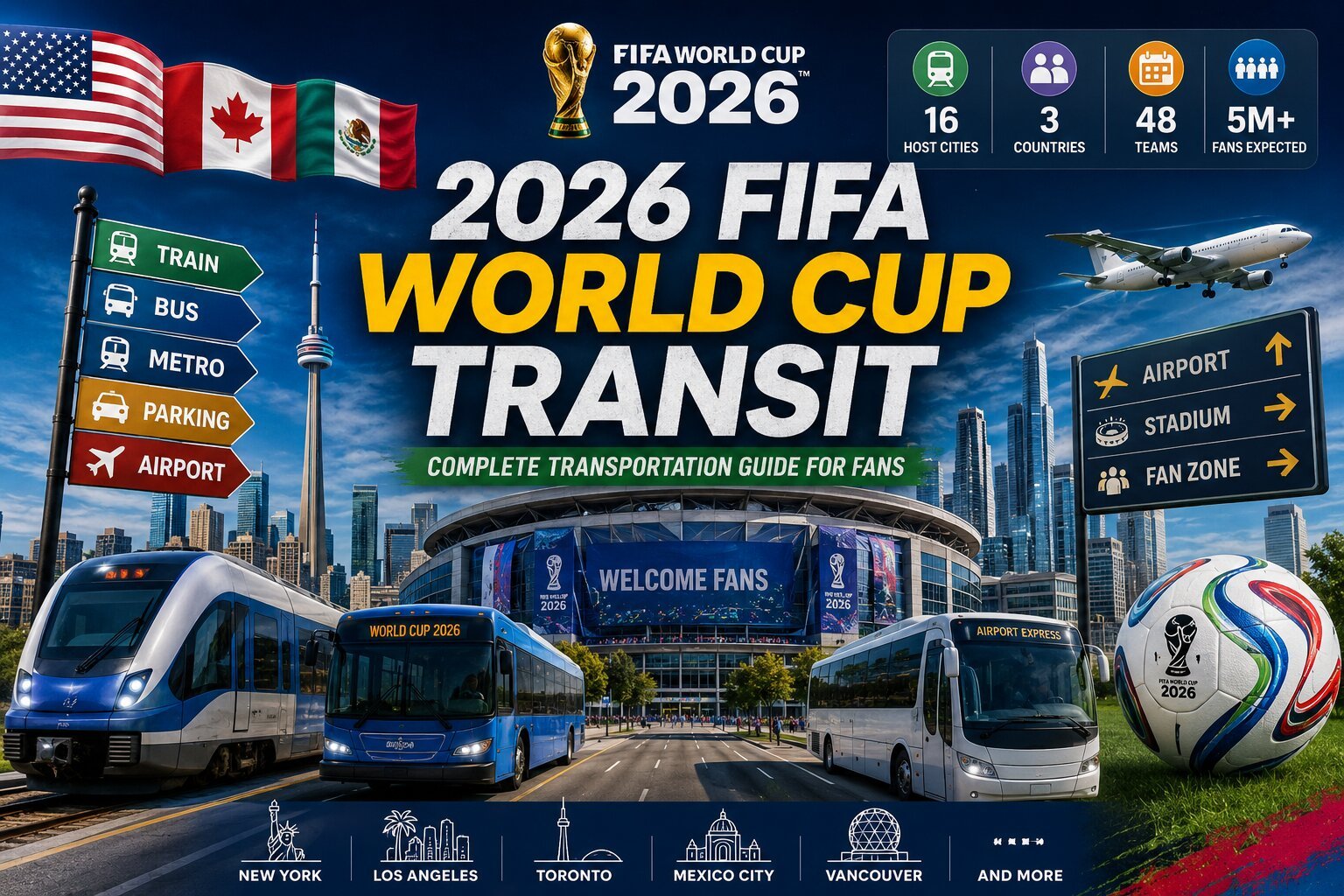
The 2026 FIFA World Cup will be the biggest football tournament in history, hosted across the United States, Canada, and Mexico. With millions of fans expected to travel between 16 host cities, transportation and transit systems are becoming one of the most important parts of the event. This guide covers the latest updates on FIFA World Cup 2026 transit plans, public transportation, airports, rail systems, parking, and travel tips for fans attending the tournament.
The 2026 FIFA World Cup is set to become the largest sporting event ever organized in North America. For the first time in FIFA history, the tournament will feature 48 teams and matches across 16 host cities in three countries: the United States, Canada, and Mexico.
While fans are excited about the football action, another major topic is drawing attention worldwide — transit and transportation. Moving millions of supporters between stadiums, airports, fan festivals, hotels, and city centers is a massive logistical challenge. Local governments, transportation agencies, and FIFA organizers are investing heavily in improving transit systems before kickoff.
From expanded rail services and airport upgrades to dedicated stadium shuttle routes, transportation planning is becoming a major part of the World Cup experience.
Why Transit Matters for FIFA World Cup 2026
Unlike previous World Cups held in one country with compact travel distances, the 2026 edition spans an enormous geographical area. Fans may travel from Vancouver to Mexico City or from Los Angeles to New York during the tournament.
Because of this, transportation is not just about reaching stadiums. It involves:
- International travel between countries
- Domestic flights across host cities
- Rail and metro systems
- Shuttle buses
- Ride-sharing services
- Airport connectivity
- Parking management
- Fan festival mobility
According to transportation reports, over 5 million spectators are expected during the tournament period.
This has forced host cities to create detailed mobility plans to avoid congestion, delays, and overcrowding.
The 16 FIFA World Cup 2026 Host Cities
The tournament will take place across:
United States
- New York / New Jersey
- Los Angeles
- Dallas
- Houston
- Atlanta
- Miami
- Seattle
- Boston
- Philadelphia
- Kansas City
- San Francisco Bay Area
Canada
- Toronto
- Vancouver
Mexico
- Mexico City
- Monterrey
- Guadalajara
Each city is developing different transit strategies based on existing infrastructure and expected crowd sizes.
Public Transit Will Be the Main Transportation Option
Most host cities are encouraging fans to avoid private cars and instead rely on public transportation.
Many stadiums will have:
- Expanded subway operations
- Dedicated shuttle buses
- Extended train schedules
- Temporary bus lanes
- Enhanced pedestrian routes
- Ride-share pickup zones
Several cities are even limiting public parking near stadiums due to FIFA security requirements.
Officials believe strong public transit systems are essential for managing the huge crowds expected during match days.
New York & New Jersey Transit Plans
The New York/New Jersey region will host the FIFA World Cup Final at MetLife Stadium on July 19, 2026.
NJ Transit and regional transportation agencies have announced a large-scale mobility plan that includes:
- Dedicated matchday shuttle services
- Expanded rail operations
- Coordination with Amtrak and the MTA
- Stadium-specific transportation tickets
Officials expect tens of thousands of fans to use trains from Manhattan to East Rutherford.
However, transportation pricing has sparked controversy. Reports initially suggested round-trip public transit tickets could cost as much as $150 before later being reduced to around $105 following criticism from FIFA and local officials.
Despite the concerns, New York remains one of the strongest transit-connected host regions in the tournament.
Houston’s “Green Corridor” Project
Houston is investing heavily in transportation upgrades ahead of the World Cup.
One major initiative is the “Green Corridor” project — a sustainable 14-mile route connecting:
- NRG Stadium
- Fan festival areas
- Metro rail systems
- Walking paths
- Public spaces
Houston METRO also plans:
- Increased light rail frequency
- Additional shuttle buses
- Extended operating hours
- Airport-to-downtown express routes
Officials expect more than 500,000 visitors during the tournament period.
The project is also focused on environmental sustainability and long-term city improvements beyond the World Cup.
Rail Travel Between Host Cities
Rail transportation is expected to play an important role, especially in the northeastern United States.
Amtrak plans to expand services connecting:
- New York
- Philadelphia
- Boston
These cities already have strong rail infrastructure, making train travel a practical option for fans attending multiple matches.
In Canada, Toronto and Vancouver already operate modern transit systems including:
- SkyTrain
- GO Transit
- TTC subway services
Mexico is also expanding intercity bus and metro operations for fans traveling between host cities.
Airport Expansion and International Flights
Air travel will be critical because of the large distances between host cities.
Major airlines including:
- American Airlines
- Delta
- United
- Air Canada
- Aeromexico
are expected to add thousands of additional flights during the tournament.
Many airports are currently undergoing upgrades to handle increased international passenger traffic.
Travel experts recommend fans:
- Book flights early
- Avoid last-minute city changes
- Stay within regional clusters when possible
For example:
- East Coast cluster: New York, Boston, Philadelphia, Toronto
- West Coast cluster: Los Angeles, Seattle, Vancouver, San Francisco
- Central cluster: Dallas, Houston, Kansas City, Monterrey
This can significantly reduce travel stress and costs.
Challenges Facing FIFA World Cup Transit
Despite the planning, transportation remains one of the biggest concerns surrounding the tournament.
Some challenges include:
- Expensive transportation pricing
- Limited public transit in some cities
- Heavy traffic expectations
- Long travel distances
- Security restrictions around stadiums
Dallas and Kansas City have faced criticism because some stadium areas have weaker public transportation systems compared to cities like New York or Seattle.
Several host cities are now receiving additional federal transportation funding to improve mobility before the tournament begins.
Best Transit-Friendly Host Cities
Based on current transportation infrastructure, experts believe these cities may offer the smoothest transit experiences:
Top Transit-Friendly Cities
- Seattle
- New York/New Jersey
- Philadelphia
- Toronto
- Vancouver
- Atlanta
These cities already have strong rail, metro, or airport connectivity systems.
Cities with weaker transportation infrastructure are expected to rely more heavily on shuttle buses and event-specific transit services.
Tips for Fans Traveling During the World Cup
Fans planning to attend the 2026 FIFA World Cup should prepare early.
Important Travel Tips
- Book accommodations near public transit
- Use trains whenever possible
- Purchase transportation passes in advance
- Arrive early on matchdays
- Avoid renting cars in dense cities
- Follow official host city transit apps
Experts also recommend choosing fewer host cities rather than trying to travel across the entire continent during the tournament.
The Future Impact of World Cup Transit Investments
One important aspect of FIFA World Cup 2026 transportation planning is the long-term impact on cities.
Many projects are designed to improve:
- Urban mobility
- Public transportation
- Sustainability
- Walkability
- Airport connectivity
Host cities hope these upgrades continue benefiting residents long after the tournament ends.
For example, Houston’s Green Corridor project and Toronto’s expanded transit planning are expected to leave lasting infrastructure improvements.
Conclusion
The 2026 FIFA World Cup is not only a football tournament — it is also one of the largest transportation challenges ever attempted in modern sports history.
With 16 host cities spread across North America, transit planning has become essential for ensuring a successful fan experience. Governments, transportation agencies, and FIFA organizers are investing billions into rail systems, airports, shuttle routes, and public transit upgrades to prepare for the massive global audience.
Although challenges remain, the latest transportation plans show that host cities are working aggressively to improve mobility, accessibility, and sustainability ahead of kickoff.
For fans attending the tournament, understanding transit systems early could become just as important as securing match tickets.